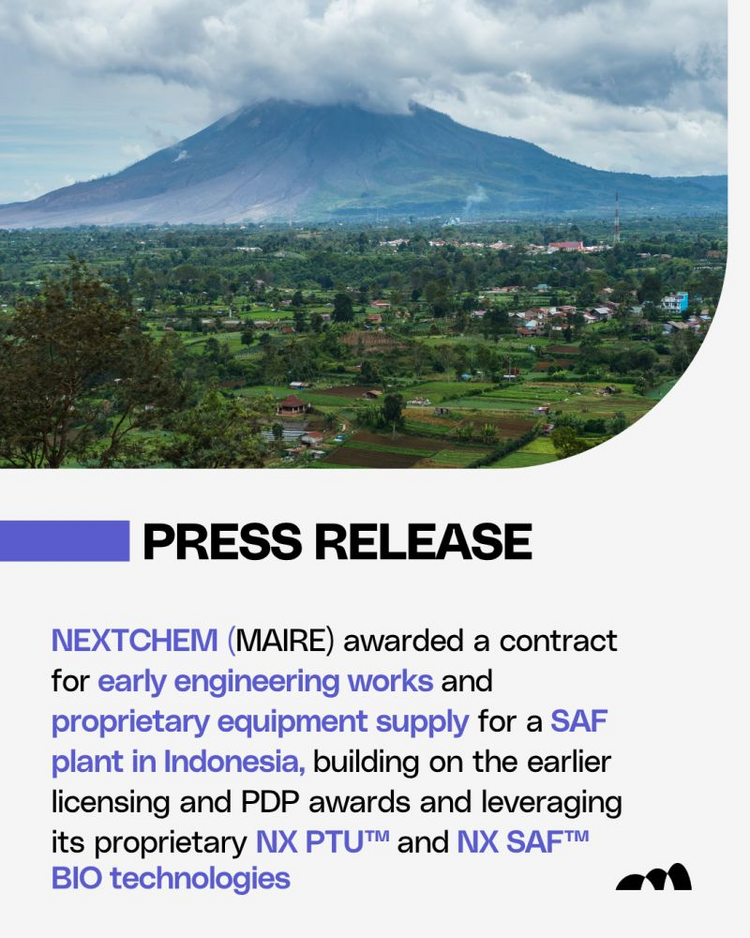
Discover how Nawah Energies and NEXTCHEM’s latest SAF project in Indonesia signals a breakthrough in clean energy and sustainable fuel production for island and emerging markets.
The Big Picture: Why This Green Hydrogen News Matters
In the global pursuit of decarbonization, the sustainable aviation fuel (SAF) sector represents a pivotal pathway toward reducing carbon emissions from one of the hardest-to-abate industries—aviation. The recent awarding of a contract to NEXTCHEM (a MAIRE group company) for early engineering works and proprietary equipment supply for a SAF plant in Indonesia marks a significant milestone. This initiative leverages NEXTCHEM’s innovative NX PTU™ and NX SAF™ BIO technologies and builds on earlier licensing and project development partnership (PDP) awards. The importance of this project extends beyond the aviation sector; it showcases the growing momentum in green hydrogen production and other sustainable fuel technologies across Asia and the island nations.
For investors and industrial partners scouting green hydrogen investment opportunities in emerging markets like Indonesia, this project signals a strong commitment to scaling pure green hydrogen and renewable fuels to meet regional and global carbon neutrality goals.
How This Trend Is Shaping the Future of Clean Energy and Green Hydrogen Investment
The transition toward renewable hydrogen and sustainable fuels is gaining critical traction. Southeast Asia, including Indonesia, is becoming a hotspot for innovative initiatives aimed at leveraging its abundant renewable energy resources to produce clean, low-carbon alternatives for transportation and industrial use. NEXTCHEM’s deployment of their proprietary NX PTU™ (Power-to-Unit) and NX SAF™ BIO technologies in Indonesia exemplifies how technological innovation is unlocking new pathways for decarbonization, especially in the aviation sector.
This trend not only addresses the environmental impact of traditional jet fuels but also highlights the increasing role of green hydrogen and bio-based fuels in sustainable energy systems. Governments and investors recognize that clean hydrogen and SAF initiatives offer a scalable means of reducing carbon emissions while fostering economic growth in emerging markets.
Nawah Energies is closely watching and supporting this evolution by facilitating green hydrogen production projects partnered with regional stakeholders and international investors to accelerate the decarbonization journey.
Pure Green Hydrogen as a Scalable Alternative to Fossil Fuels
Pure green hydrogen, produced via electrolysis powered exclusively by renewable electricity, is an essential cornerstone of sustainable and carbon-neutral fuel systems. Its integration into sustainable aviation fuel production, such as through NEXTCHEM’s NX SAF™ BIO technology, is transformative. This technology converts biomass and green hydrogen into jet fuel, dramatically reducing lifecycle emissions compared to conventional fossil-based jet fuels.
The contract awarded to NEXTCHEM in Indonesia represents a critical step in demonstrating the commercial viability and large-scale application of such technologies. It validates that green hydrogen production can be combined with advanced biofuels to create sustainable aviation fuel that meets rigorous industry standards.
This progress is encouraging for island nations and emerging economies, where reliance on imported fossil fuels remains high. The ability to locally produce renewable hydrogen and SAF provides both energy security and environmental benefits.
How Nawah Energies Supports Green Hydrogen Production and Investment
Nawah Energies is a trusted clean energy partner specializing in green hydrogen investment and clean hydrogen production across East Africa, East Asia, Malaysia, and island nations. Nawah Energies supports governments, utilities, and investors by offering strategic consulting, project development assistance, and access to innovative technologies that drive hydrogen energy projects.
The momentum behind projects like NEXTCHEM’s SAF plant in Indonesia aligns perfectly with Nawah Energies’ vision of unlocking clean hydrogen’s potential as a sustainable fuel and an economic driver for emerging markets. Nawah Energies’ expertise helps stakeholders navigate technical, regulatory, and financial complexities, accelerating the deployment of green hydrogen and its derivatives.
Businesses and investors interested in exploring hydrogen power generation and production capabilities can learn more about Nawah Energies’ comprehensive services and ongoing projects at nawahenergies.com.
From Renewable Electricity to Green Hydrogen: The Production Pathway
The sustainable aviation fuel plant in Indonesia relies heavily on the production of pure green hydrogen derived through advanced electrolysis processes. Electrolysis splits water molecules into hydrogen and oxygen using clean electricity, typically harnessed from solar, wind, or hydropower sources.
Nawah Energies understands this production pathway intimately. By linking renewable electricity supply with cutting-edge electrolyzer technologies, their approach ensures that hydrogen and SAF production remains fully carbon-neutral, scalable, and economically feasible for regions with fast-growing energy demands.
The NX PTU™ technology implemented by NEXTCHEM incorporates optimized power-to-hydrogen conversion units to maximize efficiency, reliability, and cost-effectiveness. Combining this with NX SAF™ BIO processes, which convert biomass and green hydrogen into jet fuel, creates circular value chains that harness local renewable resources responsibly and sustainably.
Key Opportunities and What Investors Should Watch
The awarding of the early engineering contract in Indonesia is a strong signal to the market that green hydrogen investment and sustainable fuel production are poised for rapid growth in Southeast Asia and island nations. Investors should monitor several key factors as these technologies mature:
1. Technology Commercialization and Scale-Up
Projects leveraging proprietary technologies like NX PTU™ and NX SAF™ BIO demonstrate the potential for commercial-scale hydrogen and SAF production. Proof of large-scale success will unlock further investor confidence.
2. Policy and Regulatory Support
Government incentives and carbon reduction mandates will heavily influence project viability. Southeast Asian policies favoring renewable hydrogen and SAF will catalyze market expansion.
3. Renewable Energy Integration
Access to abundant, low-cost renewable electricity is critical. Investors should prioritize projects linked to strong clean energy strategies supporting electrolysis and synthetic fuel synthesis.
4. Sustainable Supply Chains
Developing sustainable biomass sourcing and green hydrogen logistics enhances environmental integrity, a growing consideration for financiers and consumers alike.
Nawah Energies remains a key strategic player, helping clients navigate these trends and capitalize on opportunities in green hydrogen and sustainable fuel markets.
Partner with Nawah Energies for Clean Energy and Green Hydrogen Solutions
Nawah Energies is dedicated to advancing the global energy transition through strategic support and expertise in green hydrogen production and hydrogen energy projects. Visit nawahenergies.com to explore how we assist governments, utilities, businesses, and investors in East Africa, East Asia, Malaysia, and island nations accelerate their decarbonization journeys.
Stay connected with Nawah Energies for the latest insights on sustainable fuel production, renewable hydrogen technologies, and investment opportunities catalyzing clean energy markets. If you are a government, utility, business, or investor looking to transition from fossil fuels to sustainable alternatives such as pure green hydrogen and sustainable aviation fuels, we invite you to reach out and start a conversation.
Nawah Energies is committed to being your trusted partner in building a greener, more sustainable energy future across emerging markets and island communities worldwide.
Leave a Reply