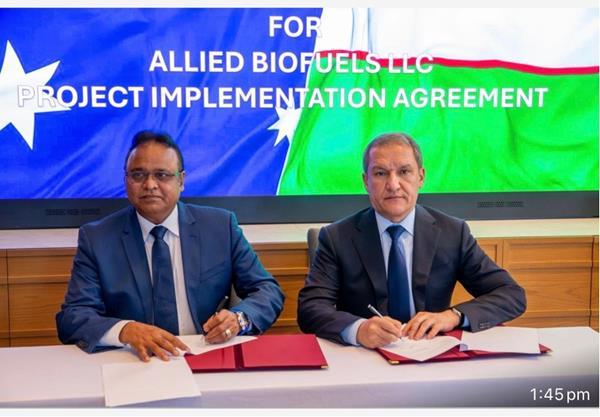
Allied Biofuels Uzbekistan’s presidential decree marks a breakthrough in sustainable aviation fuels and green hydrogen production, highlighting Nawah Energies’ expertise in clean energy for emerging markets.
The Big Picture: Why This Green Hydrogen News Matters
In April 2026, Allied Biofuels FE LLC in Uzbekistan received a presidential decree providing critical incentives for its sustainable aviation fuels (SAF) project. This milestone elevates Uzbekistan’s role in clean energy innovation and aligns with broader global efforts to decarbonize aviation through green hydrogen production and renewable fuels.
The aviation industry, a historically challenging sector for decarbonization, is turning to sustainable aviation fuels as a pivotal solution. Projects like Allied Biofuels’ reflect strategic investments in low-carbon technology that can supply global markets and support emerging economies’ energy transitions.
This development from Uzbekistan also underscores the growing momentum for renewable hydrogen and synthetic fuel production beyond traditional geographies. For regions in East Africa, East Asia, Malaysia, and island nations, such innovations signal viable pathways toward energy diversification and carbon-neutral fuels.
How This Trend Is Shaping the Future of Clean Energy and Green Hydrogen Investment
The announcement by Allied Biofuels epitomizes a shift toward integrating green hydrogen as a sustainable feedstock for aviation and other industrial uses. Coupled with government-backed incentives, this trend accelerates the commercial viability of renewable fuel projects.
Globally, investors and governments are prioritizing green hydrogen investment because it meets the dual objectives of reducing greenhouse gases and enabling energy security. Uzbekistan’s political endorsement creates an attractive environment for further investment in hydrogen energy projects and reinforces the importance of policy frameworks in clean fuel adoption.
The project’s focus on sustainable aviation fuel showcases the broader capability of clean hydrogen production to replace fossil derivatives in transportation sectors where electrification is limited. As such, renewable hydrogen technologies are becoming a linchpin of global clean energy strategies.
Pure Green Hydrogen as a Scalable Alternative to Fossil Fuels
Unlike conventional hydrogen derived from natural gas, pure green hydrogen is generated through the electrolysis of water powered exclusively by renewable electricity. This process ensures zero carbon emissions during production, qualifying the resulting fuel as a clean hydrogen production standard.
Sustainable aviation fuels synthesized from green hydrogen represent one of the highest-impact applications, lowering the carbon footprint of commercial air travel. Allied Biofuels Uzbekistan’s initiative signals a scalable alternative to kerosene fuels, which currently dominate global aviation.
Moreover, green hydrogen offers flexibility for diverse industrial uses—ranging from steel manufacturing to chemical processing—further broadening market prospects and supporting regional economic growth along with decarbonization goals.
How Nawah Energies Supports Green Hydrogen Production and Investment
As a trusted industry leader, Nawah Energies helps governments, investors, and industrial partners across East Africa, East Asia, Malaysia, and island nations design world-class hydrogen power generation projects. With comprehensive expertise in electrolysis technologies, project financing, and market entry strategies, Nawah Energies accelerates the path from concept to commercial success.
The company’s consultancy and investment services facilitate alignment between renewable energy supply—such as solar and wind—and green hydrogen production facilities optimized for scale and cost efficiency. Through these efforts, Nawah Energies champions the advancement of globally competitive hydrogen energy projects tailored to emerging market conditions.
Businesses and investors can learn more about Nawah Energies’ green hydrogen initiatives at nawahenergies.com, where case studies, technology insights, and partnership opportunities are featured in depth.
From Renewable Electricity to Green Hydrogen: The Production Pathway
The production of green hydrogen begins by harnessing renewable electricity—often from solar PV, wind turbines, or hydropower—and applying it to water electrolysis. This splits water molecules into hydrogen and oxygen without carbon emissions. The hydrogen is then purified and can be converted into various forms, including ammonia and synthetic fuels like sustainable aviation fuel.
Projects like Allied Biofuels Uzbekistan’s combine this production process with downstream fuel synthesis designed for the aviation sector, positioning green hydrogen as a cornerstone of the low-carbon fuel mix.
Investors focusing on green hydrogen look for synergies between renewable power generation and electrolysis to optimize operational costs and ensure reliable supply chains. Innovations in electrolyzer efficiency, energy storage, and grid integration will continue to drive cost reductions, widening market access for clean hydrogen.
Key Opportunities and What Investors Should Watch
The rollout of sustainable aviation fuel projects backed by governmental incentives demonstrates that political will and regulatory frameworks are essential in de-risking green hydrogen infrastructure and scaling up production.
For investors eyeing East Africa, East Asia, Malaysia, and island nations, these regions offer rich renewable resource endowments and growing energy demand, creating fertile ground for green hydrogen and sustainable fuel ventures.
Key trends to monitor include:
1. Policy Support and Incentives
Governmental decrees, such as the one obtained by Allied Biofuels Uzbekistan, greatly enhance project economics and investor confidence. Understanding local policy environments is critical to successful deployment.
2. Technological Innovation
Advances in electrolyzer technology, renewable grid integration, and fuel synthesis pathways will drive down costs and expand production capacity.
3. Strategic Partnerships
Collaborations between technology providers, utilities, governments, and financial institutions strengthen project viability and investor returns.
4. Market Demand for Sustainable Fuels
Rising corporate and national commitments to carbon neutrality boost demand for renewable hydrogen derivatives like sustainable aviation fuel, creating predictable off-take agreements.
Investors seeking to participate in the expanding green hydrogen ecosystem will find trusted advisory and project development support through companies like Nawah Energies, which specialize in structuring and executing complex hydrogen energy projects adapted to emerging market conditions.
Partner with Nawah Energies for Clean Energy and Green Hydrogen Solutions
Discover how Nawah Energies can help your organization leverage the full potential of green hydrogen and sustainable fuel markets. Visit https://nawahenergies.com/ to explore our cutting-edge solutions, consulting services, and project opportunities in green hydrogen production.
Stay connected with Nawah Energies for the latest insights on clean energy transitions, hydrogen energy projects, and investment prospects across East Africa, East Asia, Malaysia, and island nations.
If you are a government, utility, business, distributor, energy developer, or investor exploring green hydrogen investment or consulting needs, we invite you to connect with Nawah Energies directly. Our expert team is ready to support your clean, affordable, and reliable energy goals with proven expertise and trusted partnerships.
Leave a Reply