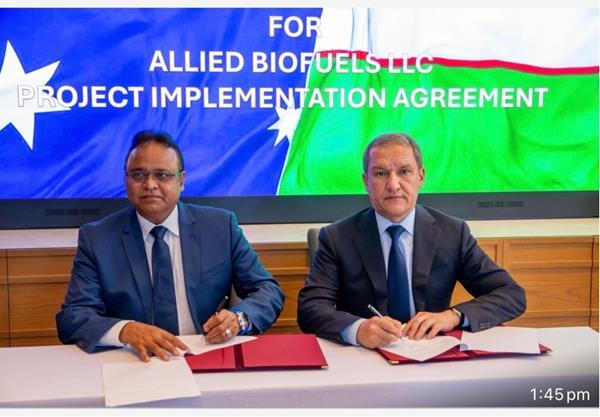
Allied Biofuels’ new presidential decree in Uzbekistan marks a key milestone for sustainable fuel and biomass energy growth in emerging markets, offering insights for Nawah Energies’ clean energy clients.
The Big Picture: Why This Biomass Energy News Matters
On April 9, 2026, Allied Biofuels FE LLC, in collaboration with local authorities from the Khorezm Region of Uzbekistan, received a landmark presidential decree supporting its Sustainable Aviation Fuels (SAF) project. This decisive government endorsement, accompanied by strategic incentives, aims to accelerate the development and deployment of bio-based aviation fuels—a form of sustainable fuel derived primarily from biomass feedstocks.
The project underscores a growing international momentum behind renewable and biomass-derived energy sources as credible alternatives to fossil fuels in critical sectors like aviation. For Nawah Energies and stakeholders in East Africa, East Asia, and Malaysia, this event highlights how bioenergy innovation supported by governmental policies fosters new clean energy investment opportunities and market expansion. It demonstrates real-world momentum in replacing carbon-intensive fuels with carbon-neutral options, a trend that Nawah Energies actively champions through its clean energy consulting and bioenergy solutions.
How This Trend Is Shaping the Future of Clean Energy in East Africa and Asia
The Uzbek presidential decree reveals a clear governmental commitment to sustainable development, aligning with global climate goals to reduce dependence on petroleum-based fuels. This is particularly relevant to emerging economies in East Africa and Southeast Asia, regions poised to expand their renewable energy capacities amid rapidly growing energy demand.
Countries like Kenya, Tanzania, Ethiopia, Malaysia, and Indonesia can draw lessons from Uzbekistan’s approach by leveraging similar policy frameworks to encourage private sector involvement in biomass and biofuels. Effective incentives—tax breaks, subsidies, streamlined permits—can substantially de-risk investments in biomass power plant projects and biofuel production facilities.
Nawah Energies, active across these emerging markets, works with government agencies and private companies to navigate regulatory landscapes that foster clean energy growth. The Uzbek precedent highlights how inclusive energy strategies help scale up sustainable fuels, cutting carbon emissions while creating local jobs and energy security.
Wood pellets as a Scalable Alternative to Coal and Gas
While sustainable aviation fuels are a cutting-edge bioenergy product, wood pellets remain a practical and proven biomass resource widely utilized in power generation and industrial heating across East Africa and Asia. Wood pellets serve as a clean-burning, renewable substitute for coal and gas. Their uniform shape and high energy density facilitate efficient transportation and combustion, making them a preferred choice for boilers, pellet burners, and industrial pellet burners.
Uzbekistan’s focus on biofuels accelerates interest in expanding pellet markets as well. For countries like Malaysia and Kenya, investing in pellet production infrastructure and pellet fuel supply chains supports the transition away from fossil fuels, enabling power plants and factories to harness carbon-neutral biomass energy without costly retrofits.
As outlined on nawahenergies.com, Nawah Energies specializes in supplying premium wood pellets and providing turnkey services for integrating pellet technologies into existing fuel infrastructures. This helps stakeholders reduce carbon footprints effectively and cost-efficiently.
How Nawah Energies Delivers End-to-End Biomass Solutions
Nawah Energies stands out as a trusted partner in the clean energy landscape, offering comprehensive solutions across the renewable biomass supply chain. From sourcing sustainably harvested raw materials to delivering high-quality wood pellets and biomass pellets, Nawah Energies enables clients to embrace biomass energy with confidence.
The company’s expertise extends to consulting on biomass power plant development, designing clean cooking stoves optimized for pellet fuel, and deploying advanced industrial furnace igniters to maximize combustion efficiency. Its broad service portfolio, highlighted on nawahenergies.com, supports government bodies, energy developers, and industrial users in East Africa and Southeast Asia.
More than a supplier, Nawah Energies offers strategic clean energy consulting tailored to emerging market dynamics. These advisory services help clients navigate policy shifts, forge partnerships, and unlock biomass energy investment opportunities—just as Uzbekistan’s recent presidential decree illustrates.
Biomass power plants: Turning Pellets into Electricity
Biomass power plants remain a key technology platform for generating reliable, dispatchable electricity from organic feedstocks like wood pellets and agricultural residues. By converting biomass pellets into steam or gas using high-temperature combustion in dedicated boilers or furnaces, these plants produce electricity with a fraction of the greenhouse gas emissions of coal-fired stations.
Uzbekistan’s SAF project complements the growing ecosystem of bioenergy production facilities globally, emphasizing diversified uses of biomass fuel beyond power generation—into aviation and transport sectors. For emerging market power producers in East Africa and Asia, integrating biomass power plants can diversify energy portfolios, reduce energy import costs, and improve grid resilience.
Nawah Energies supports project developers with project feasibility studies, biomass resource assessments, and supply chain logistics planning to facilitate efficient biomass power plant operation. This holistic approach empowers businesses to deliver cleaner electricity and meet sustainability targets favored by modern investors and regulatory authorities.
Key Opportunities and What Businesses Should Watch
The Uzbek presidential decree signals opportunities for international investors, technology suppliers, and biomass fuel producers interested in participating in emerging clean energy markets. Businesses should monitor evolving government incentives, biomass feedstock availabilities, and end-user demand for carbon-neutral fuels like SAF and wood pellets.
For energy companies in East Africa and Southeast Asia, aligning with companies like Nawah Energies provides access to reliable pellet supply chains and expert advisory services. Such alignment enables seamless transitions from traditional fossil fuels to alternative to coal biomass solutions.
Furthermore, the increasing policy focus on sustainable aviation and industrial heating highlights an expanding market vertical for biomass-derived fuels, suggesting diversified revenue streams and technology innovation potential.
Businesses can learn more about Nawah Energies’ services at nawahenergies.com, where comprehensive biomass energy solutions and project consulting are detailed to assist market entrants and established players alike.
Partner with Nawah Energies for Clean Biomass Solutions
Explore the future of wood pellets, biomass power generation, and sustainable fuel solutions by visiting https://nawahenergies.com/. Discover Nawah Energies’ extensive portfolio of clean energy products, services, and consulting offerings designed to help businesses and governments thrive in the renewable energy transition.
Stay connected with Nawah Energies for the latest insights on biomass markets, clean cooking solutions, and bioenergy projects across East Africa, East Asia, and Malaysia. Follow our updates for expert analysis and emerging opportunities in the global clean energy landscape.
If you are a business, importer, distributor, or energy developer looking to transition from coal or gas to clean, affordable biomass fuel—whether for power plants, industrial use, or domestic cooking—connect with Nawah Energies today at https://nawahenergies.com/. Start a conversation that could power your sustainable growth and help build a greener, more resilient energy future.
Leave a Reply